
Choosing the Correct Density of Your Solar Shades: 1%, 3%, 5% or 10% Openness Explained
When it comes to selecting roller shades made with screen fabrics, one of the most important decisions you’ll make is choosing the correct density of your solar shades. The openness factor—commonly available in 1%, 3%, 5%, and 10%—plays a huge role in how much sunlight enters your home, how well you can see outside, and how much privacy you maintain at night.
If you live in Palm Springs or the greater Coachella Valley, this decision matters even more. With our intense desert sun and long, hot summers, the right solar shade density can dramatically improve comfort, protect interiors, and even reduce energy bills.
Let’s break it down in simple terms so you can confidently choose the perfect screen fabric for your space.
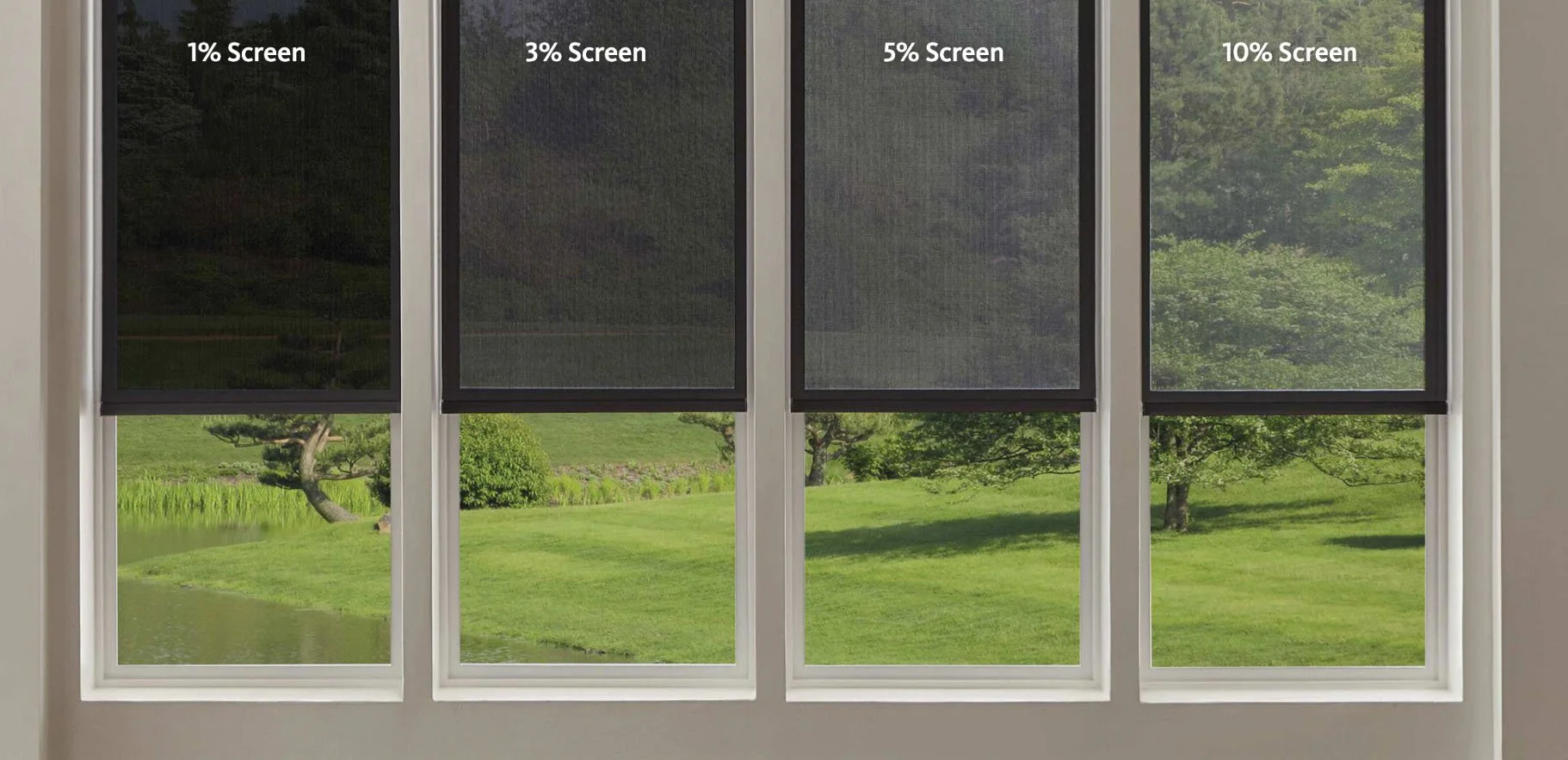
Solar Shade Density Comparison
What Does “Openness Factor” Mean in Solar Shades?
The openness factor refers to the percentage of open space in the screen fabric weave.
1% openness = Very tight weave (blocks more sun)
3% openness = Tight weave (excellent balance)
5% openness = Medium weave
10% openness = More open weave (lets in more light)
Think of it like sunglasses:
A lower openness factor is like darker sunglasses.
A higher openness factor is like lighter sunglasses.
The smaller the percentage, the more UV rays, glare, and heat are reduced.
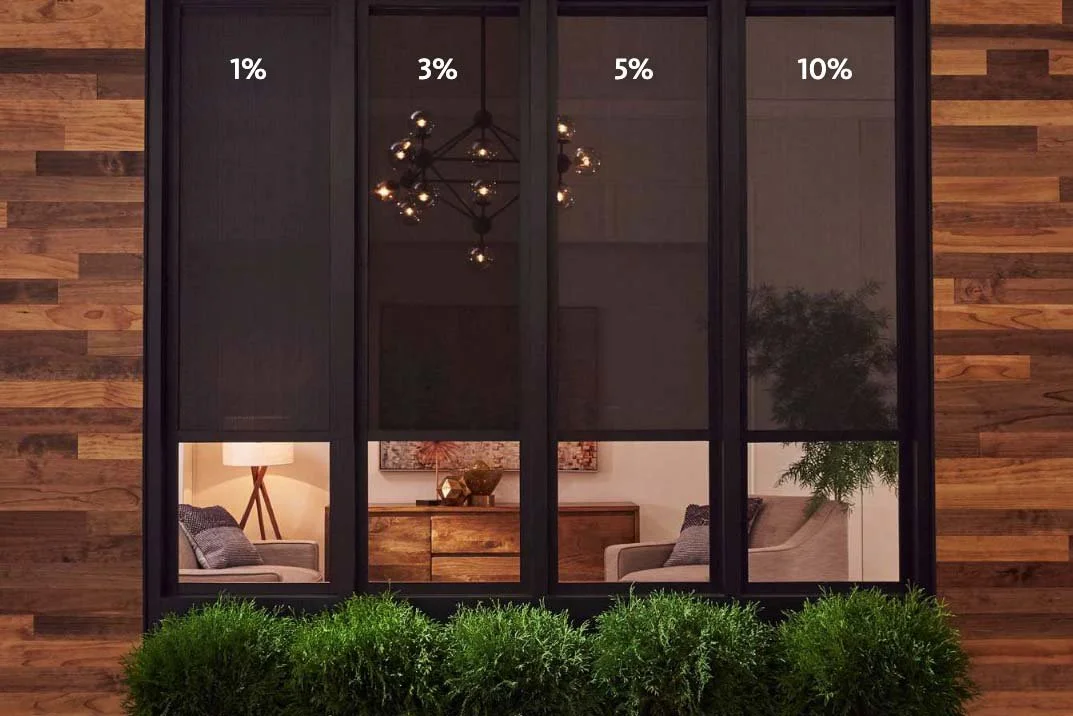
Nighttime Privacy Comparison for Solar Shades.
1% Solar Shades: Maximum Sun Control
Best for Intense Desert Sun in Palm Springs
In the Coachella Valley, where triple-digit temperatures are common, 1% openness solar shades are extremely popular.
Visibility Looking Out
You’ll still be able to see outside during the day.
The view is slightly darker and less crisp compared to 3% or 5%.
Best for reducing glare on TVs and computer screens.
Sun & Heat Blockage
Blocks up to 99% of UV rays.
Provides superior glare reduction.
Significantly reduces solar heat gain—ideal for west-facing windows.
Privacy at Night
Like all solar shades, they provide limited privacy at night if lights are on inside.
Lower openness gives slightly better privacy than 3% or 5%, but silhouettes may still be visible.
Who Chooses 1% in Palm Springs?
In our window covering business serving Palm Springs and surrounding cities, we find that homeowners who keep their shades up most of the time prefer 1% openness.
Why? Because:
They only lower shades when leaving town.
Or when the sun becomes extremely intense.
They’re willing to sacrifice a little bit of view for increased sun blockage.
In desert climates, this trade-off often makes perfect sense.
3% Solar Shades: The Coachella Valley Favorite
The Perfect Balance of View and Protection
If there’s one openness factor we install most frequently in Palm Springs, Rancho Mirage, La Quinta, and Indian Wells—it’s 3% solar shades.
Visibility Looking Out
Clearer, more natural view compared to 1%.
Excellent daytime visibility.
Maintains outdoor scenery while reducing glare.
Sun & Heat Blockage
Blocks approximately 97% of UV rays.
Still very effective for heat reduction.
Great for large windows and sliding glass doors.
Privacy at Night
Similar to 1%—privacy is limited when interior lights are on.
At night, you’ll see more silhouettes than with 1%.
Who Chooses 3%?
For homeowners who:
Keep their shades closed more often during the day.
Want strong sun protection.
Still want a comfortable view looking outside.
In the Coachella Valley area where we are located, 3% openness is the most popular choice overall. It provides that sweet spot between solar protection and maintaining the beautiful desert views.
5% Solar Shades: Brighter Interiors with Moderate Control
Great for Less Intense Exposures
5% openness is a good middle-ground option, though less common in the desert.
Visibility Looking Out
Brighter, clearer view.
More natural light enters the room.
Feels more “open” overall.
Sun & Heat Blockage
Blocks around 95% of UV rays.
Still helps with glare.
Not as strong for extreme west-facing heat.
Privacy at Night
Less privacy compared to 1% and 3%.
Interior lights will create visible silhouettes.
5% works well in:
North-facing windows
Shaded patios
Areas that don’t receive harsh afternoon sun
10% Solar Shades: Maximum View, Minimal Blocking
Designed for View Preservation
10% openness is all about visibility.
Visibility Looking Out
Bright, almost unobstructed view.
Most natural light transmission.
Feels closest to having no shade at all.
Sun & Heat Blockage
Blocks around 90% of UV rays.
Reduces some glare.
Limited heat reduction in extreme climates like Palm Springs.
Privacy at Night
Very little privacy when lights are on indoors.
Clear silhouettes and visibility from outside.
10% is typically best for:
Covered patios
Commercial spaces
Mild climate regions (less common in Palm Springs)
Daytime vs Nighttime Privacy: What You Need to Know
Here’s the key rule:
During the day:
You can see out, but people can’t see in easily—especially with lower openness factors.
At night:
When lights are on inside, the effect reverses. People outside can see in, regardless of openness factor.
If nighttime privacy is important:
Consider dual roller shades (solar + blackout).
Add drapery panels.
Use layered window treatments.
This is especially important in neighborhoods throughout Palm Desert, Cathedral City, and Indio.
Why Solar Shade Density Matters in Palm Springs
Living in Palm Springs isn’t like living in coastal California. The desert climate brings:
Intense UV exposure
Strong glare
Extreme afternoon heat
High cooling costs
Choosing the correct density of your solar shades can:
Protect flooring and furniture from fading
Reduce energy consumption
Improve indoor comfort
Maintain your beautiful mountain views
As a local window covering business serving the Coachella Valley, we always recommend considering:
Window orientation
How often shades will be lowered
Interior lighting
Personal preference for view vs. protection
Frequently Asked Questions
1. Is 1% too dark for solar shades?
Not at all. It slightly reduces clarity but provides superior sun protection—ideal for Palm Springs’ strong sun.
2. Why is 3% the most popular in the Coachella Valley?
Because it offers the best balance between visibility and heat reduction for homeowners who keep shades down frequently.
3. Do solar shades provide complete privacy at night?
No. When interior lights are on, silhouettes are visible from outside.
4. Which openness factor blocks the most heat?
1% blocks the most heat and UV rays.
5. Are solar shades energy efficient?
Yes. They reduce solar heat gain, which lowers cooling costs in hot climates.
6. Can I combine solar shades with blackout shades?
Absolutely. Dual roller systems are a popular solution for total light control and privacy.
Final Thoughts: Making the Right Choice for Your Home
Choosing the correct density of your solar shades doesn’t have to be complicated. In Palm Springs and throughout the Coachella Valley, 1% and 3% openness dominate for a reason—they’re built for desert living.
If you:
Keep shades closed often → 3% is typically best
Keep shades up most of the time → 1% offers stronger sun protection when needed
Every home is unique, and professional guidance makes a difference. If you're searching for expert window coverings in Palm Springs, Rancho Mirage, La Quinta, or surrounding cities, working with a local specialist ensures you get the perfect fit for your lifestyle and climate.
Ready to upgrade your home with high-performance solar roller shades? Contact your trusted Coachella Valley window covering professionals today and experience the difference the right openness factor makes.